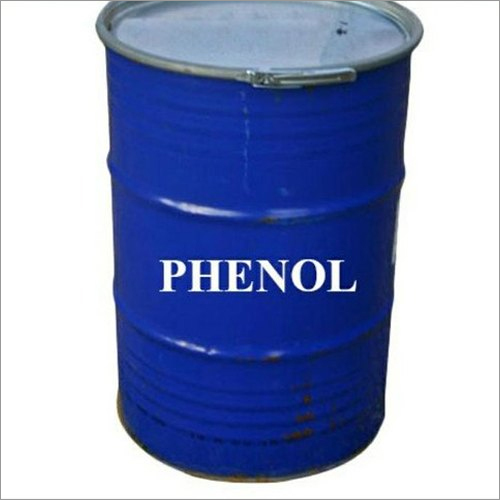
About Liquid Phenol
Liquid Phenol can be found naturally or can be manufactured in a manufacturing unit. This colourless to white liquid is a commercial product that has a distinct odour. In comparison to water, it evaporates more slowly. It is used to produce phenolic resins, nylon and several synthetic fibres. Apart from its use in disinfectant and antiseptic products, it also finds use in certain medicinal preparations. Liquid phenol remains stable during transportation. When added to water, it does not react. But it reacts with several chemicals.
Product Specifications :
|
Packaging Type
|
Drum
|
|
Form
|
Liquid
|
|
Packaging Size
|
220 kg
|
|
Chemical Formula
|
C6H6O
|
|
Molecular Weight
|
94.11 g/mol
|
|
Density
|
1.07 g/cm3
|
|
Boiling Point
|
181.7 degree C
|
|
Soluble In
|
Water
|
High-Purity Phenol: Industrial and Laboratory GradeOur liquid phenol meets strict standards for industrial and laboratory grade specifications, ensuring a purity level of 99%. Supplied in robust, sealed drums to maintain product integrity, this chemical compound is trusted by manufacturers, laboratories, and researchers across India for various applications, from chemical synthesis to antiseptics.
Safe Storage and Handling PracticesPhenol must be stored in tightly closed containers, away from heat and direct sunlight, to maintain its stability and extend shelf life. Due to its toxic and caustic properties, proper safety measures-such as using personal protective equipment and ensuring adequate ventilation-are critical during all handling and usage processes.
Versatile Applications Across SectorsLiquid phenol is utilized in chemical manufacturing, resins, plastics, dyes, pharmaceuticals, and disinfectants. Its solubility across various solvents and consistent physical characteristics make it an essential ingredient for a wide range of industrial processes, enhancing efficiency and quality in diverse production chains.
FAQ's of Liquid Phenol:
Q: How should liquid phenol be stored to ensure maximum stability and shelf life?
A: To maintain its stability and guarantee the full 2-year shelf life, liquid phenol should be stored in tightly closed drums, away from heat sources and direct sunlight. Proper containment and environmental controls help prevent degradation and unwanted reactions.
Q: What are the primary applications and benefits of using liquid phenol?
A: Liquid phenol serves as a key raw material in the manufacturing of plastics, resins, pharmaceuticals, dyes, disinfectants, and laboratory reagents. Its high purity and solubility in water and various organic solvents make it highly versatile and effective across diverse industrial and laboratory applications.
Q: When handling liquid phenol, what safety precautions must be followed?
A: Due to its toxic and caustic nature, phenol requires protective equipment such as gloves, goggles, and appropriate clothing. Adequate ventilation is necessary, and care must be taken to prevent skin contact, inhalation, or ingestion, as phenol is harmful and can cause burns or serious health risks.
Q: Where does phenol show compatibility issues, and what substances should be avoided?
A: Phenol reacts vigorously with strong oxidizers, acids, and bases. It is essential to store and use phenol separate from these substances to prevent hazardous chemical reactions and potential safety hazards.
Q: What is the typical process of using phenol in chemical manufacturing?
A: In manufacturing, phenol is commonly used as a precursor or reactant, especially in the synthesis of resins, plasticizers, and pharmaceuticals. Its high reactivity facilitates various chemical transformations, contributing to efficient process yields and superior product quality.
Q: Why is phenol classified as toxic and what are the potential health risks?
A: Phenol is toxic if swallowed, inhaled, or absorbed through the skin. It causes burns, respiratory distress, and may have systemic toxic effects, making strict adherence to handling and exposure guidelines imperative to ensure user safety.





 Send Inquiry


 Send Inquiry


