About Liquid Diethyl Ether
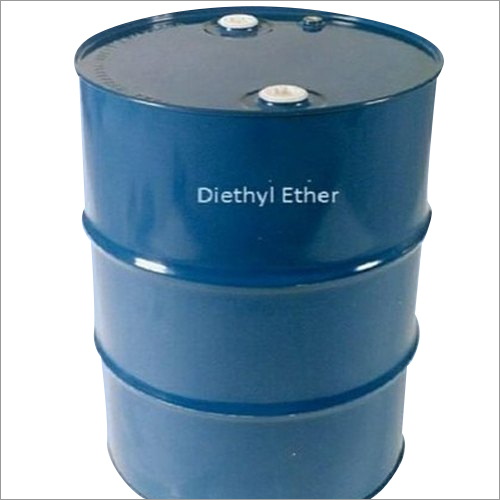
Ethyl ether or liquid diethyl ether is a colourless liquid solution that has characteristic odour. This liquid is volatile and also flammable. With a chemical formula of C2H5OC2H5, it is generally used as a lab solvent. When it goes through a combustion reaction, it forms water and carbon dioxide. It is also regarded as an incredible solvent for several products, for instance wax, resin, oil, dye and alkaloid. It can recover acetic acid from aqueous solutions in cellulose acetate as well as plastic industry.
Product Details :
|
Packaging Type
|
Drum
|
|
Packaging Size
|
145 kg
|
|
Physical Form
|
Liquid
|
|
Chemical Formula
|
(C2H5)2O
|
|
Molecular Weight
|
74.12 g/mol
|
|
Density
|
713 kg/m3
|
|
Melting Point
|
-116.3 degree C
|
|
Boiling Point
|
34.6 degree C
|
Exceptional Solvent PerformanceDiethyl Ether is widely recognized for its outstanding solvency and rapid evaporation rate, which makes it ideal for laboratory and industrial processes. It dissolves a broad range of organic compounds and is miscible with most organic solvents, enabling efficient chemical reactions and extractions.
Essential Safety and Handling GuidelinesGiven its high flammability and tendency to form peroxides, Diethyl Ether demands rigorous safety practices. Always store in a tightly closed container, in a flame-proof, cool, and well-ventilated area, away from sunlight and ignition sources. Regularly inspect storage for peroxide formation and never use near open flames.
Reliable Quality and Flexible PackagingSupplied in bulk drums, IBC tanks, or bottles, our Diethyl Ether meets strict analytical and industrial standards for purity and consistency. Whether in a laboratory or industrial setting, tailored packaging options ensure safe, efficient delivery and usage.
FAQ's of Liquid Diethyl Ether:
Q: How should Diethyl Ether be stored to maintain its stability and safety?
A: Diethyl Ether should be kept tightly sealed in a cool, dry, well-ventilated, and flame-proof area, away from sunlight and sources of ignition. This prevents the formation of explosive peroxides and maintains its stability throughout its 12-month shelf life.
Q: What precautions are necessary when handling Diethyl Ether in the laboratory or industry?
A: Always wear appropriate protective equipment and work in a well-ventilated space. Avoid all sources of ignition because the substance is highly flammable, and frequently monitor for peroxide formation when containers have been opened or stored for extended periods.
Q: When is Diethyl Ether typically used in chemical processes?
A: Diethyl Ether is used as a solvent or extraction agent in chemical synthesis and laboratory procedures. It is also a historical anesthetic agent, though this use has largely been discontinued due to safety concerns.
Q: Where does Diethyl Ether show its greatest benefit as a solvent?
A: Its low viscosity and high miscibility with many organic solvents make it highly effective in extractions, purification, and synthesis processes, particularly where rapid evaporation and solubility of organic compounds are required.
Q: What process should be followed if exposure to Diethyl Ether occurs?
A: If inhaled, move the person to fresh air immediately and seek medical attention. In case of skin or eye contact, rinse thoroughly with water. Always adhere to the safety guidelines specified in the material safety data sheet (MSDS).
Q: How can users benefit from the different packaging options for Diethyl Ether?
A: Available in bulk drums, IBC tanks, and bottles, users can select the most appropriate packaging for their requirements, ensuring both safety and cost-effectiveness for applications ranging from small laboratory experiments to large-scale industrial processes.
Q: What makes Diethyl Ether hazardous, and how can the risks be managed?
A: Diethyl Ether is highly flammable and can form explosive peroxides with exposure to air or light. Risks can be mitigated by proper storage, using it in well-ventilated areas, regularly checking for peroxide formation, and ensuring all handling follows stringent safety protocols.





 Send Inquiry


 Send Inquiry


