About Liquid Ethyl Acetate
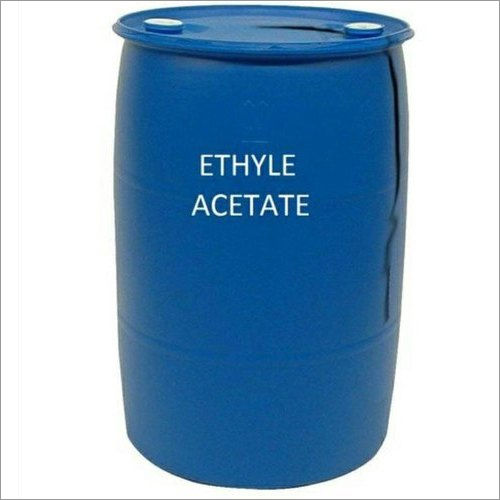
The organic compound that customer can buy from us is liquid ethyl acetate. This ester of ethanol and acetic acid that is used in large scale production. With the chemical formula of C4H8O2, it is used as a solvent in chemical reactions or preparations of cleaning liquid, perfume, lacquer, varnish and paint. This colourless liquid ethyl acetate has a melting point of -83.6 deg C and boiling point of 77.1 Deg C. Liquid ethyl acetate with molar mass of 88.1 g.mol-1 dissolves in water, acetone and ethanol.
Product Specifications :
|
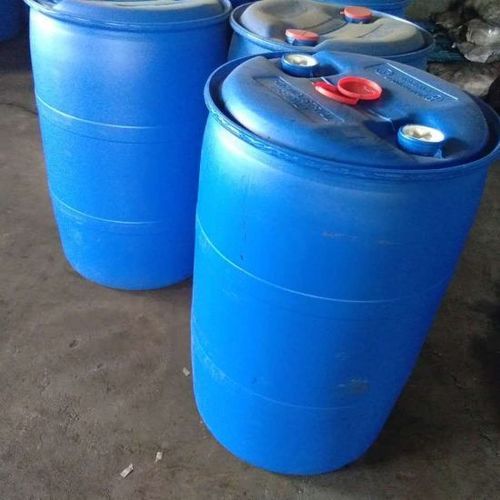
Packaging Type
|
Barrel
|
|
Packaging Size
|
200 kg
|
|
Physical Form
|
Liquid
|
|
Chemical Formula
|
C4H8O2
|
|
Density
|
902 kg/m3
|
|
Boiling Point
|
77.1 degree C
|
|
Solubility
|
Wate
|
Applications Across IndustriesEthyl Acetate's versatility makes it indispensable in diverse sectors. It serves as a key solvent in the production of paints, coatings, adhesives, and inks due to its rapid evaporation and compatibility with many resins. Its utility extends to pharmaceuticals and food industries, such as extraction processes and as a flavor enhancer. The compound's high purity and effective solvency contribute significantly to process efficiency and product quality.
Handling and Storage GuidelinesGiven its classification as a highly flammable liquid, Ethyl Acetate should be stored in cool, dry, well-ventilated areas, away from ignition sources. Sealed containers such as drums, IBCs, or tankers help maintain stability and minimize contamination. Proper storage ensures safety, preserves product integrity, and extends shelf life up to 24 months. Handling should always follow standard industrial safety protocols to prevent accidental exposure or fire risk.
FAQ's of Liquid Ethyl Acetate:
Q: How should Ethyl Acetate be stored safely?
A: Ethyl Acetate must be kept in tightly sealed containers, such as drums or IBCs, in cool, dry, and well-ventilated storage areas. It should be stored away from any ignition sources, open flames, or direct sunlight due to its high flammability. Adhering to these guidelines helps maintain product quality and ensures user safety.
Q: What are the main industrial uses of Ethyl Acetate?
A: This chemical is widely used as a solvent in paints, coatings, adhesives, and inks. It is also employed in pharmaceuticals for extraction processes, and as a flavor enhancer in the food industry. Its fast evaporation rate and solvency power make it suitable for laboratory and chemical synthesis applications as well.
Q: When does Ethyl Acetate become hazardous during handling?
A: Ethyl Acetate poses significant risk when exposed to heat, sparks, or flames due to its low flash point (-4C). Inhalation or ingestion of high concentrations can be harmful or toxic. Ensure proper ventilation, use appropriate protective equipment, and follow safety phrases S16 (keep away from ignition sources), S26, and S33 during handling.
Q: Where can Ethyl Acetate be sourced in India?
A: Ethyl Acetate is available from reputable suppliers, traders, and wholesalers across India. It is commonly supplied for industrial, food, and pharmaceutical uses, conforming to relevant ASTM/IS standards and offered in various packaging options such as drums, tankers, or intermediate bulk containers (IBCs).
Q: What is the benefit of using Ethyl Acetate as a solvent?
A: Ethyl Acetate offers several benefits, including excellent solvency for a wide range of resins, rapid evaporation, and low viscosity. These features contribute to fast drying in coatings and inks, efficient cleaning in industrial processes, and high purity suitable for pharmaceuticals and food applications.
Q: How is Ethyl Acetate classified in terms of safety and environmental impact?
A: Ethyl Acetate is classified as a flammable liquid under Hazard Class regulations (UN 1173), carrying the R11 risk phrase for high flammability. It is readily biodegradable, reducing long-term environmental impact, but its volatile organic compound (VOC) nature means it should be used with controls to minimize atmospheric emissions.





 Send Inquiry


 Send Inquiry


